The caves and nerja's beginnings
A chance discovery of ancient caves sheds new light on the history of Nerja, a place transformed from a fishing village into an archaeological hotspot.
It all started with those caves
I was just outside Nerja, at Maro beach, when I saw a sign for the Nerja Caves. Honestly, I'd never heard of them, but the description of prehistoric cave paintings really piqued my curiosity. That was early March, and the weather was perfect for such an outing. Well, that sign had probably been there for years, mind you. Anyway, these caves were only discovered by chance in 1959 by a group of boys following bats. Quite a bizarre story. They didn't just find impressive stalactites and stalagmites, but also prehistoric tools and skeletons. By the way, entry to the caves currently costs €14 for adults. What I didn't expect was just how big the complex actually is. Part of the caves is open to the public; you walk along well-maintained paths there. The oldest cave paintings date back around 42,000 years, truly unbelievable. That adds a whole new dimension to the region's history. Anyway, the discovery of these caves changed everything for Nerja. Before, it was a small fishing village. Now it's one of Spain's most important archaeological sites, and that, of course, attracts a lot of visitors. The archaeological museum in town, the Museo de Nerja, gives you even more background information; that's definitely worth it if you want to dive deeper. The funny thing is, apart from the caves, Nerja is also known for its cliffs at the Balcón de Europa. That viewpoint is beautiful, especially in spring when everything's in bloom. But these caves prove that Nerja's history goes back much further than just a few nice views. A totally different world underground, you could say. Oh, and the temperature in the caves is a constant 19 degrees Celsius, which makes it a pleasant place to visit, even when it gets warmer outside. You'll be inside for about an hour. I recommend booking your tickets online; that saves waiting at the entrance.
A journey through time, from prehistory to today
I noticed that Nerja really has a rich history, that's clear. By the way, the first traces of human habitation date back to prehistory, about 20,000 years ago. You can mostly see that in the famous Nerja caves, with their impressive rock paintings. For a visit, you're paying around €14 now. Definitely worth it; you'll easily spend half a day there. It struck me that the Romans left their mark here too. They called the settlement "Detunda." There are still remains of a Roman road and a bridge to be found in the area. I read somewhere that even Roman coins have been excavated, quite special, wouldn't you say? Honestly, I find it fascinating how different cultures have all passed through here. Later came the Moors, and they changed the name to "Narixa," which means 'abundant spring'. They introduced new agricultural techniques and built the first irrigation system. The remains of an old Moorish watchtower, El Torre de los Guardas, can still be seen along the coast. It's about 5 km east of town. I noticed that after the Reconquista in the 15th century, Nerja came under Christian rule again. The town developed further, especially through agriculture and fishing. What I find quite amusing is that in the 16th century there was a sugar cane factory, really a sign of the booming economy back then. That factory was located in the area now known as Maro, close to the current beaches. The Balcón de Europa, Nerja's most iconic spot, also has an interesting history. It was once the site of an old fort that was supposed to protect the coast from pirates. Currently, you don't pay anything to get there, and the view is beautiful, especially at sunset. From the Balcón, you can walk straight into the old town, with its narrow streets. Now, of course, Nerja is a popular tourist spot. But you can feel the history everywhere. The white houses, the narrow cobbled streets; it all tells a story. There are many small museums and archaeological sites. For example, the Museo de Nerja, where for €4 you learn everything about local history, from prehistory to now. It's really a compact and informative museum; you're done in an hour and a half.
Why Nerja is different from other white villages
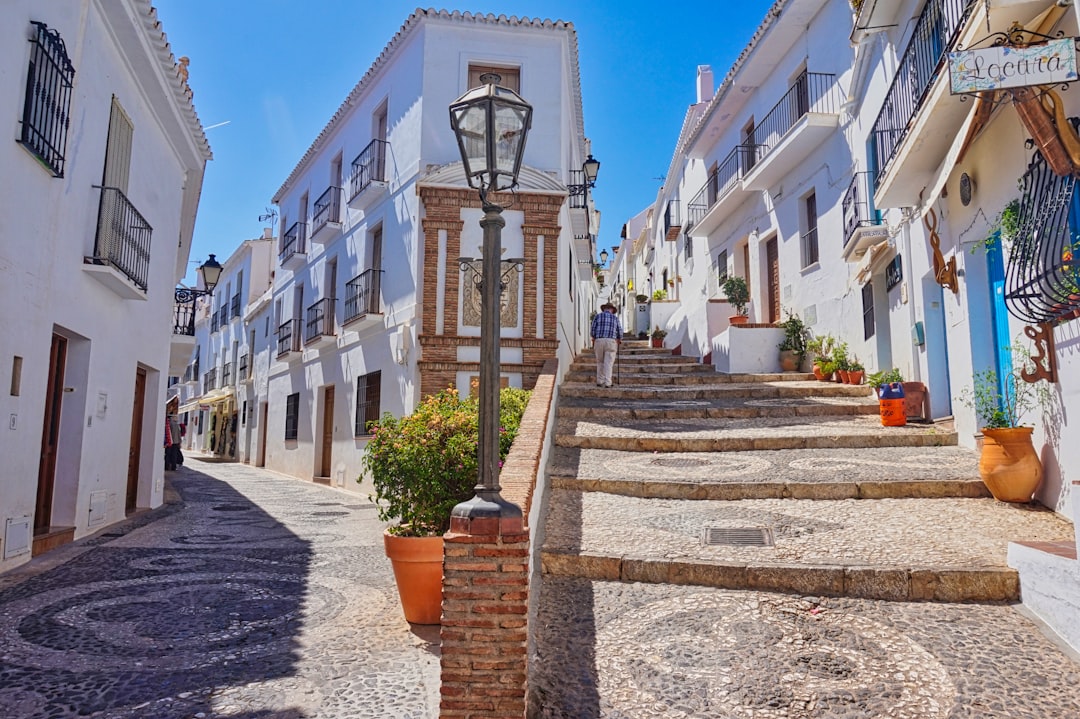
Many white villages here on the Costa del Sol have those typical Moorish influences. It struck me that it's different here in Nerja. Something you notice: that Nerja's history goes back much further, even to prehistory, and you can see that reflected. It struck me that Nerja's development is much less uniform than, say, Frigiliana. There, you see that clean, Moorish style everywhere. Here in Nerja, it's a sort of patchwork of influences, from Roman remains to the rebuilding after the 1884 earthquake. It struck me that the architecture in Nerja is less streamlined, and that's precisely what makes it so charming. Many villages are built around a central castle or mosque, but Nerja grew more organically. You notice that in the jumble of streets. Something that stands out: Nerja even has a Roman bridge that's part of an old Roman road, the Via Augusta. I'd really thought that would only be inland. That bridge, near Maro, harks back to the time when this was a Roman settlement. Though, its strategic coastal location also made Nerja vulnerable to attacks over the centuries. That's why you see far more defensive structures here in Nerja than in many other inland villages. That Balcón de Europa was once a fort, a cannon platform. In many Andalusian villages, you mainly see agriculture as the economic driver, but Nerja already had a busy port early on. That explains why the town has been a melting pot of cultures for centuries. You notice that in the diversity you find here, for example, in the cuisine. Another difference is that Nerja, despite the tourist influx, has retained much of its original character. Many other coastal towns have been completely rebuilt. Here in Nerja, you feel the history in every cobblestone, truly special. That's partly due to the Nerja caves, which were rediscovered back in 1959. This gave tourism a huge boost right from the start. Many other villages had to make do with mass development later, but Nerja already had a unique attraction to offer then.
My favourite hidden corner full of stories
If I had to pick a favorite spot, I'd always default to the "Balcón de Europa." But everyone knows that one. My real preference goes to a lesser-known spot: the remains of Nerja's old castle, which is now called Parque Verano Azul. The ruins are just outside the busy center, about a 10-minute walk from Plaza Cavana. You'll still find some impressive stone walls there. I recently read that this was actually where Nerja's original settlement began. It's fascinating to stand there and think that people have lived here for centuries. You can walk around peacefully and touch the old stones. There's no entrance fee, so you can always go for free. Good for the wallet, too. At Parque Verano Azul, there's a small kiosk this season that serves really good churros con chocolate. For a portion, you pay about €3.50, which is a great price. I often go there in the afternoon, grab my laptop, and work for a bit. The atmosphere invites daydreaming about the history that unfolded here. What struck me was that a small part of the old city wall is still visible, further down a side street. You can easily find it via Google Maps if you search for "Muralla de Nerja." It's hidden behind some modern buildings, a bit of a contrast. It does show how the city has developed over the centuries. I find this little corner so special because you can feel the history here without the hustle and bustle of the tourist highlights. There are no big explanation signs here; you have to do a bit of exploring yourself. In that sense, it's an authentic experience. The quiet here, so close to the lively center, is striking. The last time, I even found an old coin by chance. Not a valuable one, but it completed the experience. I stayed there for about an hour and a half. It's worth discovering this place. I recommend sitting down for a bit, having a coffee for €1.80 at the kiosk, and taking in the surroundings.
Spring, perfect for discovering all this
March is really ideal for a visit to Nerja. Interestingly enough, I avoid the peak months, then you're tripping over tourists. Temperatures are around 20 degrees, perfect for wandering through the streets for hours without melting away. Plus, accommodation prices are still more reasonable then. Outside the high season, you often find better deals. Last month, I still paid €65 per night for an apartment within walking distance of the center via Booking.com. Many local restaurants also offer menus del día for about €12, including a drink. That saves a lot if you're traveling on a budget. Interestingly enough, it's also easier to find a parking spot then, if you're coming by car. Parking in the center remains a challenge, but there are large paid car parks like the one under Plaza de España. A day ticket there currently costs €18, which saves me a lot of searching and stress. If you want to visit the caves, which I definitely recommend, March is perfect. You can book tickets online via cuevadenereja.es for €13 per adult, and then you don't have to queue for long. They have a set schedule and the groups are smaller then, which makes the experience much nicer. What I didn't immediately expect is that nature around Nerja is so exuberant in March. The almond trees are in bloom, and you see wild flowers everywhere. A walk along the Río Chillar, though I won't go into detail now, really offers a nice change after all the historical impressions. That route, interestingly, starts just outside the village. Go ahead and explore. Believe me, Nerja in March is simply top.