Escape the winter to sunny Nerja
Tired of the Swedish winter? Discover Nerja, a sunny destination with mild temperatures and a lively expat community.
Why do we escape winter anyway?
I was knee-deep in snow in Sweden, my fingers numb with cold. Honestly, I was completely fed up with the endless winter. That's why this year I decided to swap the Swedish winter sun for the Spanish sun. It was a spontaneous decision, but I have absolutely no regrets. Just as an aside, Nerja's known for its mild winters, with temperatures rarely dropping below 15 degrees Celsius, even in January. That makes it a good plaster for the winter blues. Anyway, I didn't fancy the hustle and bustle of Málaga itself, so Nerja was a logical choice. I was looking for something a bit smaller. What I didn't expect was how easy it was to settle in here. There's a big expat community, mainly from Scandinavia and the UK. Lots of people overwinter here and join local walking clubs or sports groups. I heard about a golf course nearby, Baviera Golf, where you can play a round for just €60. That's quite different from golfing in the snow, isn't it? Well, back to the point. The grey skies and short days up north really wore me out. Here in Nerja, I've got an average of 320 days of sunshine a year, and the days are already getting longer in March. I can just go outside, grab a seat on a terrace at the Balcón de Europa with a sea view, and order a café con leche for less than two euros. What struck me: the local market on Tuesday mornings in Calle Cisne, behind the bus station, is also a nice change. I pick up my fresh fruit and vegetables there for a fraction of the supermarket price. A kilo of oranges here, for example, is only €1.50. Those are the little things that make life a lot more pleasant when you're escaping winter. Plus, the nature here is beautiful. I've been to the Parque Natural de las Sierras de Tejeda, Almijara y Alhama a few times already; it borders Nerja directly. The walking paths are well-maintained and the views are spectacular. The contrast with the white plains of Sweden is huge, I can tell you that.
Nerja in March – is it spring already?
Nerja in March feels very different from home. On average, it's about 18 degrees Celsius here. The sun shines brightly, usually eight hours a day. However, it can still cool down in the evening, to about 10 degrees. A jacket is not an unnecessary luxury then. I notice that many locals still wear their thick winter coats. It's funny how everyone deals with temperatures differently. Well, in Sweden, you often have temperatures below freezing in March. Snow is then more the rule than the exception, especially in the south of the country. The average temperature there is around zero degrees. Honestly, the contrast is bizarre every year. A few weeks ago, I was still chattering my teeth. Now I'm sitting outside on a terrace. The nice thing is that the almond trees are already in bloom here. The spring sun makes everything lively. You see people outside everywhere. Hikers on the cliffs. Fishermen on the coast. Many restaurants along the Balcón de Europa are already setting up their terraces. A cup of coffee costs about €2.50 there, including a beautiful view. It's the ideal place to celebrate the beginning of spring. What struck me: the seawater temperature around March here is often still a bit chilly, about 15 degrees. Not everyone jumps into the sea then. I myself prefer heated swimming pools, although they are scarce. Most public swimming pools only open later in the season. But, oh well, a beach walk is already wonderful enough. What struck me: I don't miss the cold of Sweden for a moment. The light morning mist quickly clears, making way for a clear blue sky. Ideal for, for example, a visit to the caves of Nerja, which are already fully open. An entrance ticket costs around €14 per adult. That's highly recommended. I try to go there at least once a year. By the way, the chance of rain in March here is nil. Statistically, it only rains an average of three days in March. That means many outdoor activities. You can go into the mountains for a walk, for example, to the Sierras de Tejeda nature park. From the center of Nerja, that's about a 30-minute drive by car. It's a beautiful area to experience nature, now that everything is turning green again. I notice that I go hiking there more and more often.
My favorite place to catch the sun
For most people coming here from Sweden, that means flying to Málaga. Málaga airport, Aeropuerto de Málaga-Costa del Sol (AGP), is the closest and has good connections. There are direct flights from Stockholm. SAS and Norwegian, for example, offer regular flights, especially this season. A return ticket can vary from 1500 SEK to 3000 SEK, depending on how early you book. I always try to book at least two months in advance myself for the best prices. Once you've arrived at Málaga airport, there are several options to get to Nerja. The bus is often the most affordable choice. The local bus company ALSA provides regular services, and a single ticket to Nerja costs about €4.50. The bus stops at Nerja bus station, which is within walking distance of many accommodations. The bus journey takes about 50-60 minutes, depending on traffic. You can also take a taxi, but it's considerably more expensive. A ride from the airport to Nerja costs about €70 to €80. That's quite a sum, especially if you're traveling alone. I usually take the bus, 'cause it saves a lot. You can also book a shuttle bus in advance, which is a bit cheaper than a taxi. You then share it with other passengers. If you prefer a bit more freedom, consider a rental car. There are various car rental companies at Málaga airport, such as Hertz and Avis. You can rent a small car from €25 a day, depending on the season and duration. The drive to Nerja is about 70 kilometers and takes approximately 45 minutes. I find it handy to have a car for trips to the surrounding area. Do watch out for the toll on the A-7 motorway. I often take the minor roads to avoid it. They're slightly longer, but they do offer beautiful views. The route's fairly easy to follow, usually via the A-7 eastbound. From the turn-off at Torre del Mar, it's only a short distance. Whatever you choose, the journey here's usually smooth. The infrastructure's perfectly fine. I would advise arranging your transfer in advance, especially if you're arriving late in the evening. That saves a lot of searching and stress when you've just come off a flight.
How to get here easily
For most people coming here from Sweden, that means flying to Málaga. Málaga airport, Aeropuerto de Málaga-Costa del Sol (AGP), is the closest and has good connections. There are direct flights from Stockholm. SAS and Norwegian, for example, offer regular flights, especially this season. A return ticket can vary from 150 to 300 euros, depending on how early you book. I always try to book at least two months in advance myself for the best prices. Once you've arrived at Málaga airport, there are several options to get to Nerja. The bus is often the most affordable choice. The local bus company ALSA provides regular services, and a single ticket to Nerja costs about €4.50. The bus stops at Nerja bus station, which is within walking distance of many accommodations. The bus journey takes about 50-60 minutes, depending on traffic. You can also take a taxi, but it's considerably more expensive. A ride from the airport to Nerja costs about €70 to €80. That's quite a sum, especially if you're traveling alone. I usually take the bus, because it saves a lot. You can also book a shuttle bus in advance, which is a bit cheaper than a taxi. You then share it with other passengers. If you prefer a bit more freedom, consider a rental car. There are various car rental companies at Málaga airport, such as Hertz and Avis. You can rent a small car from €25 a day, depending on the season and duration. The drive to Nerja is about 70 kilometers and takes approximately 45 minutes. I find it handy to have a car for trips to the surrounding area. Do watch out for the toll on the A-7 motorway. I often take the minor roads to avoid it. They're slightly longer, but they do offer beautiful views. The route is fairly easy to follow, usually via the A-7 eastbound. From the turn-off at Torre del Mar, it's only a short distance. Whatever you choose, the journey here is usually smooth. The infrastructure is perfectly fine. I would advise arranging your transfer in advance, especially if you're arriving late in the evening.
What you really shouldn't miss
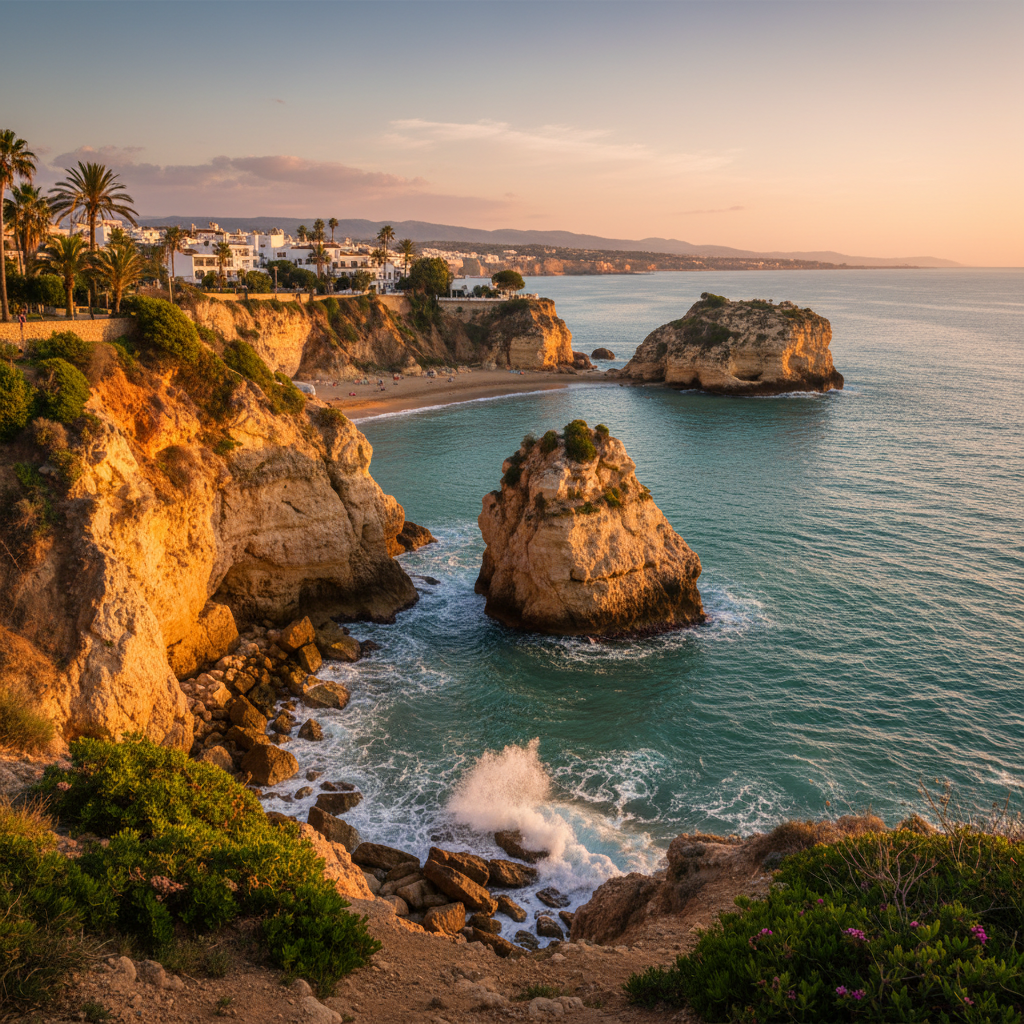
The caves of Nerja are really worth a visit. I went there again recently with some friends from the Netherlands. It takes about an hour from the center by bus. The bus stop is next to the central bus station. A return ticket costs €2.60. You can book online for the caves via their website; tickets are €14 per person. This saves a lot of time, especially as it's a bit busier here at the moment. The audio guide is free and incredibly informative. That really adds extra depth to your visit. I was surprised myself by how big and impressive those caves are. The highlight is, of course, the enormous monolith. What stands out: it's a bit overwhelming when you realize how old it all is. It's a cool, constant temperature in there, perfect for an afternoon out of the sun. What stands out: don't forget the cliff walk to Maro. The starting point is at the Balcón de Europa. From there, you follow the coastline eastwards. The route is about 4 kilometers long, one way. You walk on narrow paths with beautiful views over the Mediterranean Sea. It's advisable to wear good walking shoes. I saw someone struggling in sandals recently. If you're in Maro: then visit Maro beach. Personally, I think this is one of the most beautiful beaches here. It's a bit quieter than Nerja's town beaches. You can snorkel beautifully there, even though the seawater in March is still quite chilly. I wouldn't dare take a dip myself yet. Sunbathing, on the other hand, is perfectly fine. Interestingly, another absolute must-do is an evening walk through Nerja's old town. Not all shops are open late in the evening, but the atmosphere's relaxed. There are plenty of restaurants and tapas bars. My favorite is El Pulguilla on Calle Almirante Ferrándiz. They have delicious fried boquerones there. A portion usually costs around €7.50 and it's fresh, every single time. Worth it. Just go for it.